Many teams assume they have a clear picture of how much reach and usage data is lost through consent banners. In practice, the consent rate shown on the site rarely reflects what is actually captured across distribution and traffic sources. The result is a hidden measurement issue that affects reported reach, inventory valuation and ultimately revenue outcomes.
This issue is known as the consent gap. It describes the difference between the reach and usage you believe you can measure and what measurement and ad systems are actually able to record.
Why the consent gap exists
Data loss resulting from consent decisions is often treated as evenly distributed across the audience. In practice, this assumption rarely holds. The consent gap arises because data interpretation typically falls into one of three recurring patterns.
Situation 1: Platform bias in reported reach and performance
Reporting dashboards and ad platforms are frequently treated as a reliable reflection of reality. However, these systems only include data from consenting readers or rely on their own modelled assumptions. As a result, the figures shown fail to represent the actual volume of usage, interactions or conversions occurring on the site.
Situation 2: Misinterpreting overall consent rates
Teams attempt to compensate for missing data by taking the overall website consent rate and applying it directly to the figures reported by measurement or advertising systems.
This creates a simplified extrapolation that appears plausible but ignores how differently individual traffic sources and audience segments behave. It is a measurement error based on a false assumption of uniform user behaviour.
Situation 3: Relying on misleading averages
High average consent rates are often interpreted as a sign of reliable measurement. What tends to be overlooked is that readers arriving via external traffic sources frequently show significantly lower consent rates, while particularly valuable interactions are captured far less consistently. This is not a calculation error, but a strategic misreading of what an average value actually represents.
How the consent gap affects decision making
When measurement and advertising systems receive fewer reliable usage and interaction signals, several issues arise simultaneously.
- Reported reach and interaction volumes appear lower than they actually are
- Traffic sources and distribution channels seem weaker than in reality
- Optimisation and allocation mechanisms lack sufficient data to function reliably
- Decisions around inventory pricing and monetisation become increasingly uncertain
- Scaling audience reach or monetisable inventory becomes more difficult due to low signal density
These effects intensify during high-demand periods such as seasonal peaks or major news events, where even small measurement gaps can have a disproportionate impact on reported reach and revenue potential.
Closing the consent gap with Synthetic Users
Synthetic Users addresses these challenges by restoring essential audience and interaction signals without processing personal data from non-consenting readers. This enables advertising and measurement systems to receive more complete feedback on how content is consumed and how audiences engage, even when a significant share of readers declines tracking. As a result, downstream systems regain the signal density they need to reliably allocate demand, optimise delivery and value inventory more accurately.
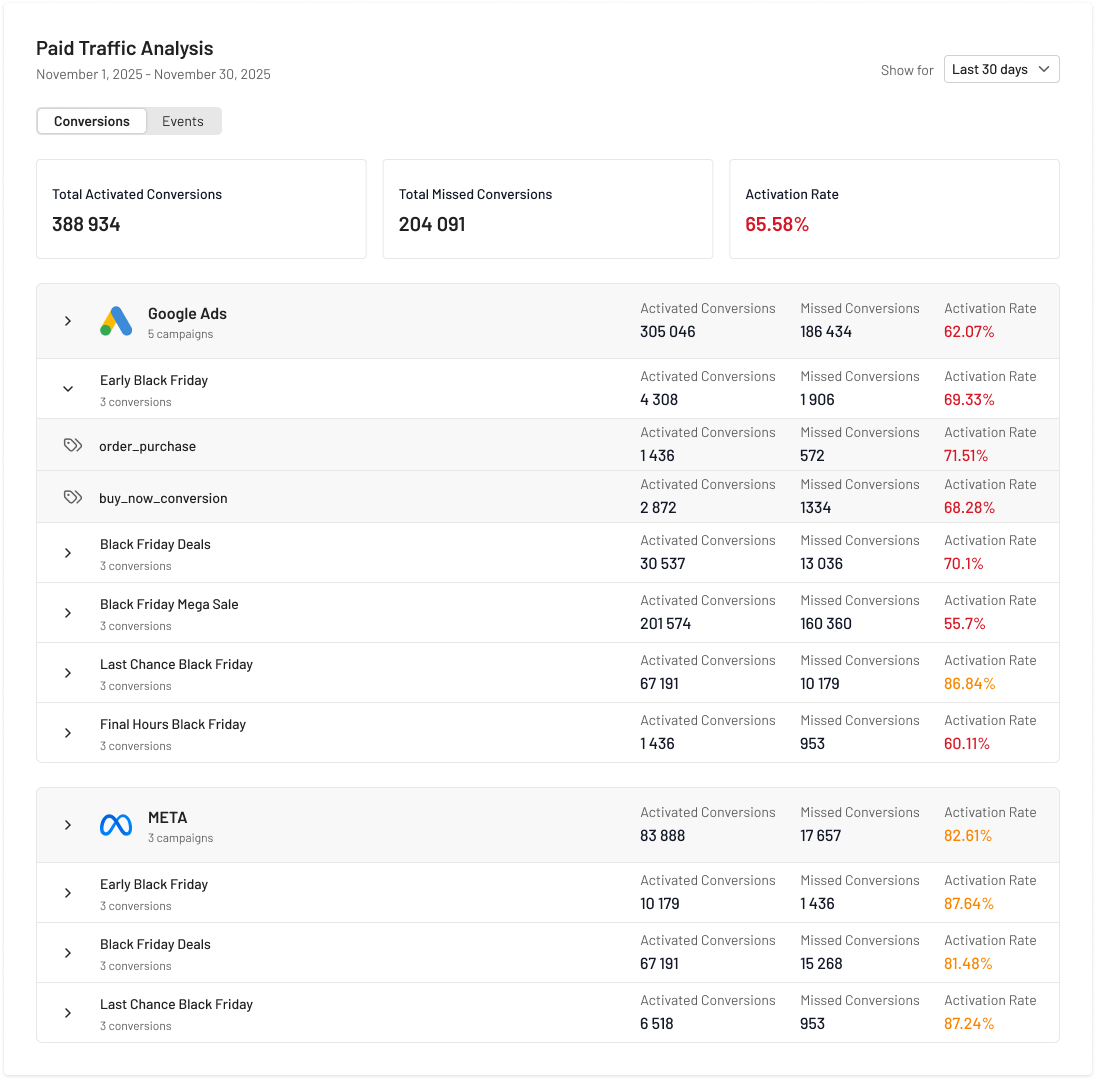
What Synthetic Users is
Synthetic Users is an AI-based, server-side capability that uses a publisher’s own first-party data to generate anonymous, privacy-safe representations of readers who do not give consent. These synthetic profiles are derived from real consumption and engagement patterns observed across the organisation's properties, rather than external benchmarks or coarse statistical averages.
The objective is clear: make the full audience economically usable again, even when individual readers choose not to be tracked, while remaining fully compliant with consent and privacy requirements. For publishers, this means reducing blind spots in audience understanding without weakening trust or regulatory compliance.
With more complete engagement and outcome signals flowing into advertising and analytics systems, publishers often regain lost efficiency across both ad monetisation and audience activation workflows.
The benefits for publisher teams
Synthetic Users enables a more realistic and complete view of how audiences consume content and respond to monetisation measures. Publishers using the feature report improvements across several business-critical dimensions, including:
- More accurately valued ad inventory due to improved signal coverage
- More stable demand allocation and pricing logic driven by richer feedback loops
- Better insight into reader behaviour beyond the consented audience
- Improved monetisation of previously underrepresented reader segments
- More reliable analysis during high-traffic or peak attention periods
By closing measurement gaps, teams gain a clearer understanding of how their content actually performs across the entire readership. This supports more confident decisions around monetisation strategies, distribution and scaling, even under declining consent rates.
.webp)